Report of Trust meeting with BCAFC - Improving Safety and Behaviour at Football Matches
In attendance from the Club: Jonathan Heaton (JH) – Safety Officer
From West Yorkshire Police: Aaron Dennis (AD) – Dedicated Football Officer (DFO)
Representing the Trust was, Manny Dominguez (MD) – Chair and Helen Jeffrey, Trust Board Member.
Apologies were given from Paula Watson (PW) – Director of Operations.
Bantams Supporters Trust met with the Club and a representative of West Yorkshire Police working with the Club on Monday 27th July.
The last time the Trust met with the Club was August last year, 2025.
SAG’s
We looked at the report from last year’s meeting and MD asked if there had been any decision on whether there can be supporter representation on the Safety Advisory Group or SAG.
Every club has a SAG which is a non-decision-making forum that advises local authorities on spectator safety, crowd management, and emergency planning. It typically brings together club officials, council departments, and emergency services.
The local authority issues the safety license certificate and is responsible for advising and assisting Clubs where necessary.
The SGSA, the Sports Ground Safety Authority is the national body that advises the government on sports ground safety. It licenses PL and EFL football grounds and oversees local authorities in safety certification. As well as the Football Supporters Association (FSA), it recommends supporter representation on the local Club SAG, see here.
JH said that the SAG meets adhoc, as because the various bodies have other demands on a day to day basis its difficult to get everyone together at any one time, but they are meeting on a coming Wednesday, so he will raise it.
MD advised it would be good to have two delegate seats, one for the Supporters Trust and the other for the Supporters’ Board so to be as inclusive as possible. MD advised that we are a Community Benefit Society and is independent from the Club. We are part of the FSA, the national body for supporters Trusts and other supporters groups.
Arrests and incidents
We then moved onto the Agenda and discussed the number of arrests / incidents. AD said that there had been 36 arrests over the course of last season (25/26) compared with only 14 the previous season (24/25). 10 out of the 36 arrests had been at the Bolton home game – the Playoff semi final. These arrests are just at home matches only.
It was said that offences were committed were mainly male and we haven’t seen a persistent crime type, i.e. drugs.
MD made the point that the number of football related arrests have had a 2 percent fall last season according to recent Home Office Statistics. See article here.
It was said the promotion had an effect. Promotion brings risk. We had Huddersfield, Wigan and Bolton – bigger Clubs with more supporters prepared to travel.
It was asked if there have been any increases of offences on social media, and there were 3 occasions of references to the fire during the 24/25 season but none last season.
HJ asked if crime relating to the fire was a banning offence and the answer was affirmative. There were pyros thrown at the end of our home match against Bolton in the second round of the Play off semi final. It was said that the kids today have no idea of how that impacted on the lives of the survivors and their families. It would be useful if there is any training on this.
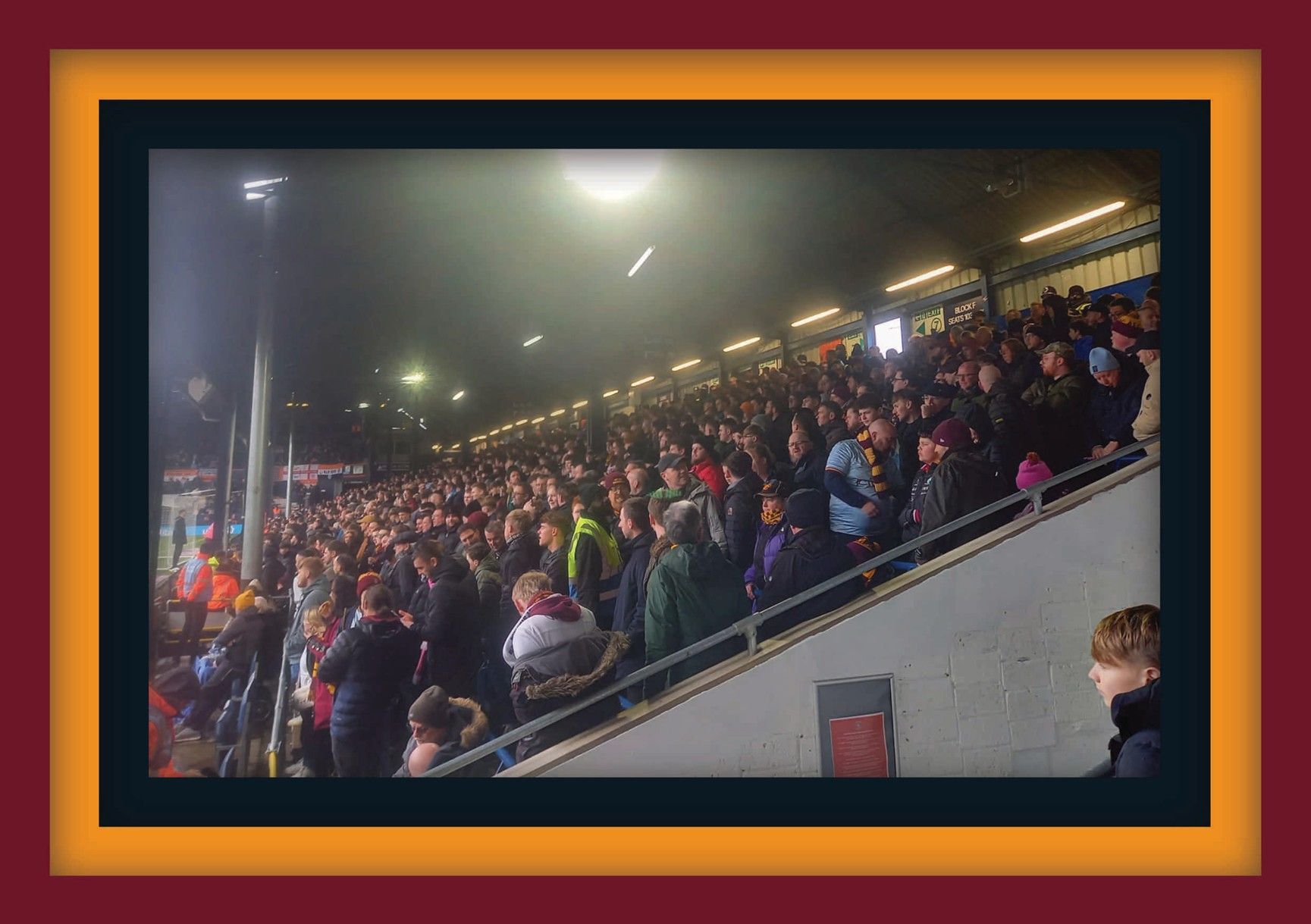
Regarding incidents, particularly at away matches, where we see big crowds swell up at regional derbies there are lots of situations that infringe on disabled groups and other vulnerable groups and nothing gets done about them – blocking others from watching the game and flares occasionally get thrown on the pitch. In these matches we tend to loose the older, more-longer standing supporters.
AD explained that there are football regulations and then offences that are public order offences, so for example standing in front of your seat is not a public order (criminal) offence so Police have no power to enforce such matters, so will not get involved.
Sometimes football stadium related situations can sometimes be the cause of argument and then can turn to threatening behaviour.
HJ said that the incidents particularly away at Huddersfield and Wigan could’ve been dealt with better. AD admitted that was the case for the Huddersfield one but it was Greater Manchester Police who have to comment on the Wigan experiences. The DFO and JH had seen a response from the Silver Commander on the day in answer to a City fans’ complaint and questions on various social media platforms.
We asked about more police at big home games and the use of dogs for drugs or pyros. AD said that to have dogs the have 6 to 8 officers with them. If supporters are caught with possession of drugs or pyro’s it will take officers away from the line of duty it was said.
MD said at some clubs he has experienced the home Club offer amnesty tables where supporters’ bags are checked over.
AD said there is a cost implication to that level of security. He said there were dogs at the Bolton Play-Off Semi Final but it didn’t prevent all pyros to be confiscated before the game. The dogs will come from a private company and policing at the stadium costs as well. The Club pays for the whole operation these days which is why our Club and most other Clubs prefer the matchday operation to be managed solely by the stewards.
Stewards
We asked about stewards’ training and help. JH said that the EFL brought in ‘SQUAD’ – ‘Stewardship Quality and Development’ training when football came back to hosting live games after lockdown, and it was all about raising standards but not a lot happened after that. All stewards have to be level 2 trained in spectator training which includes first aid, custom services, counter terrorism and life support.
The Club has a small amount of loyal City supporting Club employed staff but have its majority of stewards who are agency. Post covid the Club lost a lot of steward staff, explained JH, and it costs £350 to train 1 steward. Engagement with supporters requires regular staff. Stewards get a lot of criticism because they don’t appear to do anything.
HJ explained of an incident that happened to her at Huddersfield Town and she had to raise it with the EFL to bring about a response from them, where she then met with the Supporter Liaison Officer (SLO) for the Club. He was open to her suggestion to have a disability steward stationed to support traveling supporters in that end.
At Bradford City we have 2 very good Disability Liaison Officers (DLO’s) but they have to work through issues around the whole ground on a matchday.
HJ said it’s important for stewards in the disability areas and of course all around the ground to build a good relationship and consistency with the supporters.
JH said it can be difficult to maintain that consistency. The Club tries to retain staff that know our supporters through the agency as well as the small core of our City supporting steward and the volunteer DLO’s we have. To have all our stewards in house is not affordable at the present time.
Young offenders
We looked at how the Club deals with young offenders and JH said that the Club has a behavioural ‘ABC’ contract, where young people, and those under 18 who get involved in activities that stop short of what is breaking the law get brought into the Club with parent or guardian to sign an ‘Acceptable behaviour Agreement (ABC)’. It is a structured warning system designed to deter them from escalating into serious offenses. It also has a variety of sanctions of which education or restorative justice make up some of those sanctions.
The Trust agreed that it’s important to make our supporters more aware of the what activities and behaviors are not acceptable – football related offences, the ground regulations and what criminal offences are, but young people may just see it as authority talking at them and not take it seriously.
It was suggested that ex players who may have done crime themselves could talk to perhaps persistent offenders but it was felt that would be seen as a reward. HJ and AD felt what they have there works. Sometimes police officers in uniform come to the houses of the individual and see the parents and that has an effect.
We suggested meeting the victim if the impact of their behaviour impacted on anyone, or if they impacted on a disabled person, experience a match with the disabled person. They were open to ideas
We asked if there any alternatives ways to encourage supporters to look after each other at big games apart from reminding fans of football ground regulations and what is an offence through the tannoy and scoreboard. We suggested through the Clubs’ communication channels they could have some messages of looking after each other.
It was felt however there is so many things that the Club has to communicate out there on any given matchday it wouldn’t be practical in such a short space of time.
We agreed to meet this time next year for another progress report.